AI Automation
The Best AI Automations Are Usually Boring
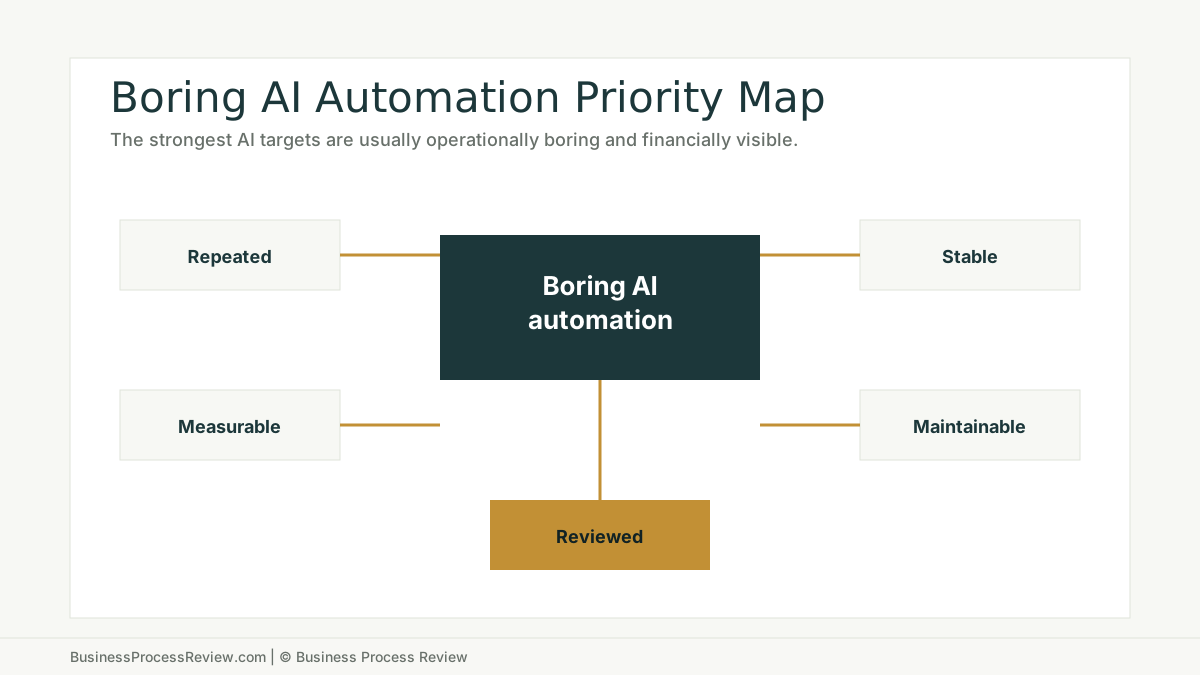
The best AI automations are usually repeated, measurable, low-glamour workflows with stable inputs, human review, and clear operational value.
The best AI automations are usually boring.
That is not a limitation.
It is the reason they work.
Flashy AI demos are easy to sell in a meeting. They produce a visible output. They feel new.
But the automations that actually help a business often live in the least glamorous places:
- intake checks
- invoice routing
- document summaries
- status updates
- missing-field alerts
- report preparation
- candidate screening support
- customer onboarding notes
- reconciliation support
- follow-up reminders
These are not exciting.
They are expensive because they repeat.
The short answer
The best AI automations usually have five traits:
- the workflow repeats often
- the input is stable enough to handle
- the output can be reviewed
- the value can be measured
- someone owns maintenance
The worst AI automations usually have the opposite traits:
- vague purpose
- low volume
- high risk
- messy source data
- no review gate
- no owner
- no metric
Novelty is not a business case.
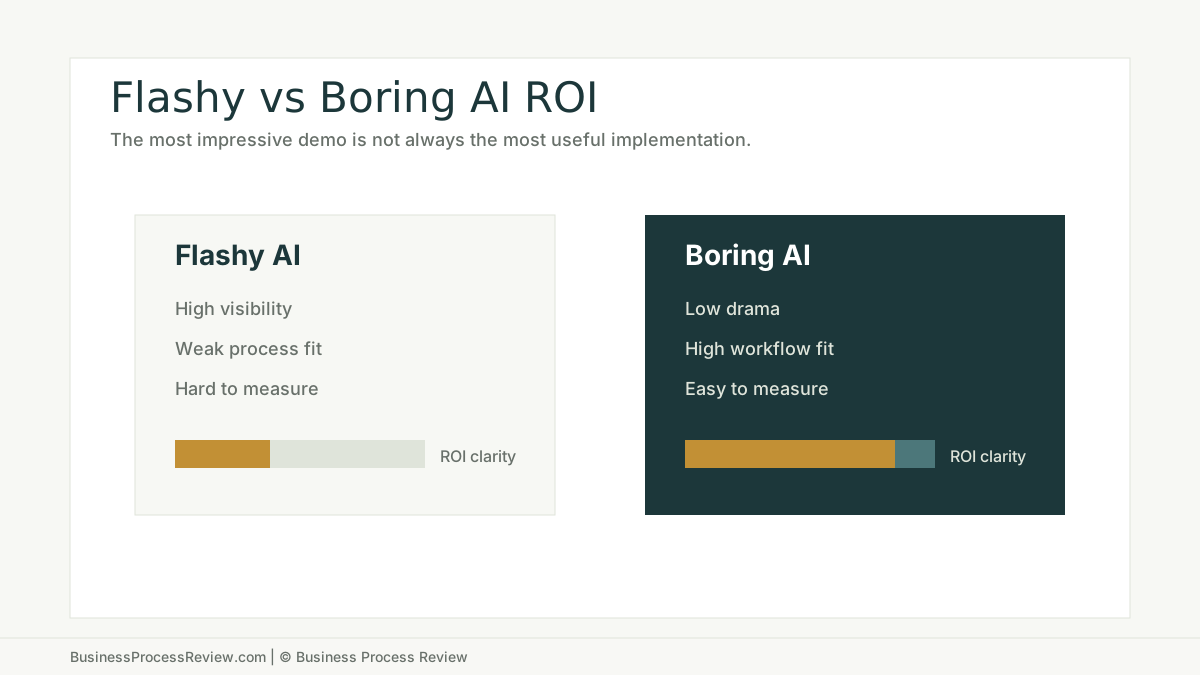
Flashy AI gets attention. Boring AI gets used.
The MIT NANDA State of AI in Business 2025 report argues that many organizations invest in visible top-line functions while back-office automation can offer better ROI. Treat that report as preliminary research, not a universal law.
Still, the operating lesson is useful.
Visible AI is not automatically valuable AI.
A customer-facing chatbot may get attention. A clean invoice exception workflow may save more time.
A sales-email generator may feel impressive. A document intake system that prevents rework every day may matter more.
Boring work has better implementation traits
AI automation needs operating constraints.
Boring workflows often have them.
They repeat. They have documents. They have fields. They have handoffs. They have status checks. They have managers chasing updates. They have rework when the intake is bad.
That makes them easier to scope.
The business can ask:
- How many times does this happen per week?
- How long does it take?
- How often is it wrong?
- Who reviews the output?
- What system receives the result?
- What metric changes if this works?
That is better than “Can we use AI somewhere?”
The labor cost is not theoretical
Use your own payroll data whenever possible.
Public wage data still helps frame the issue. The U.S. Bureau of Labor Statistics reported that the median annual wage for secretaries and administrative assistants was $47,460 in May 2024. BLS also reported that bookkeeping, accounting, and auditing clerks had a median annual wage of $49,210 in May 2024.
That does not mean every administrative task should be automated.
It means repeated administrative friction deserves review.
This connects directly to the hidden cost of manual administrative work and back-office AI automation.
The boring target still needs review
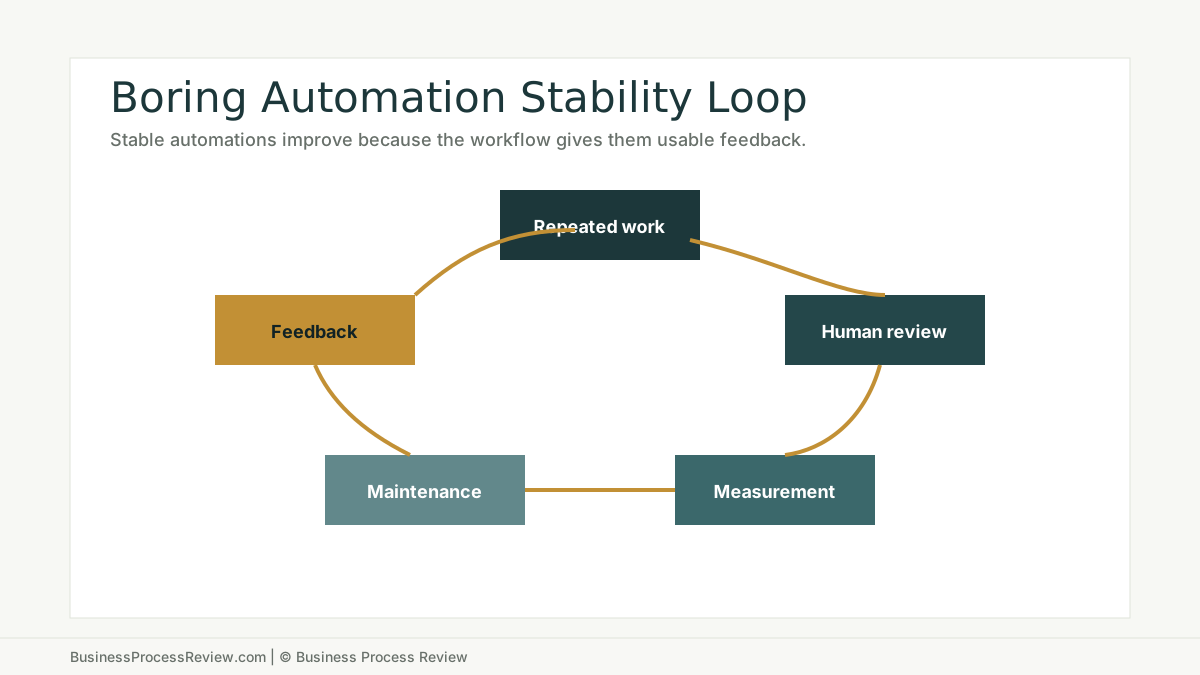
Boring does not mean automatic.
An invoice extraction workflow still needs review.
A customer onboarding summary still needs accuracy checks.
A candidate screening support workflow still needs human judgment.
A weekly report draft still needs a source of truth.
McKinsey’s State of AI 2025 research connects AI impact to workflow redesign, senior ownership, human validation, and management practices. Accenture’s AI-led process research similarly points toward process maturity, data readiness, and training.
The pattern is consistent.
AI value shows up when the workflow is designed well enough to absorb it.
Examples of boring AI automations that can work
Intake completeness checks
AI can help identify missing information in forms, emails, and attachments before work enters the queue.
The value is less rework.
Document classification
AI can classify incoming documents by type, urgency, or required next action.
The value is faster routing.
First-pass summaries
AI can summarize long notes, emails, transcripts, or documents for human review.
The value is less reading time and cleaner handoffs.
Field extraction
AI can extract invoice, customer, candidate, or project fields into a review queue.
The value is less copying and fewer manual entry errors.
Status update drafts
AI can draft updates from approved project records.
The value is less manager follow-up and more consistent communication.
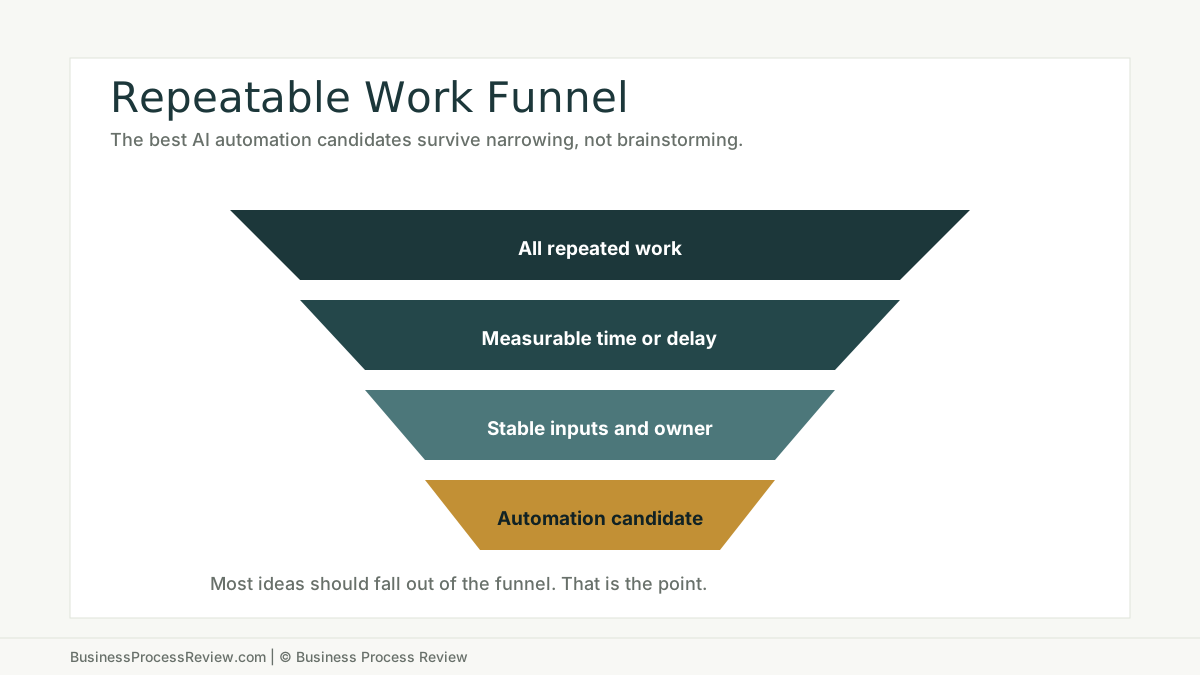
Use a funnel, not a brainstorm
AI automation brainstorming produces too many ideas.
Filtering produces better ones.
Start with repeated work.
Then narrow by measurable drag.
Then narrow by stable inputs and clear ownership.
Then decide whether AI belongs in the workflow.
The bottom line
The best AI automations do not need to impress people in a demo.
They need to reduce real work.
They need to survive exceptions.
They need a human review path.
They need maintenance.
They need a metric.
If your business is chasing AI ideas but has not reviewed the workflows where admin work repeats every week, start there.
Pick one boring workflow and book a Business Process Review before building another demo.

About the Author
Will Gordon
Will Gordon is the founder of Business Process Review and Chief Technology Officer at Billfy. He works on workflow systems, automation, and partnerships in the ServiceNow ecosystem, with a focus on practical operational improvements for growing businesses.
Connect with Will on LinkedInFAQ
Common Questions
What are the best AI automations for a small business?
The best AI automations are usually repeated workflows with stable inputs, measurable labor cost, clear ownership, review requirements, and enough volume to justify implementation.
Why are boring AI automations better?
Boring automations are easier to scope, test, review, measure, and maintain. They usually sit inside existing administrative, operational, or back-office workflows.
What AI automations should SMBs avoid?
Avoid high-risk decisions, vague productivity ideas, low-volume tasks, unclear workflows, unreliable data, and automations without a human review path.
How do you measure AI automation ROI?
Measure task volume, minutes saved, rework reduction, cycle-time improvement, fewer status checks, reduced external spend, and the management time required to maintain the automation.
Should AI automation replace employees?
For most SMBs, the practical goal is usually capacity, speed, consistency, and reduced rework. Replacement claims are often a distraction from workflow improvement.