Business Systems
Small Businesses Do Not Need More Software. They Need Better Systems.
Small businesses often buy more software when the real problem is unclear workflow, weak ownership, duplicate data, and no operating system for how work moves.
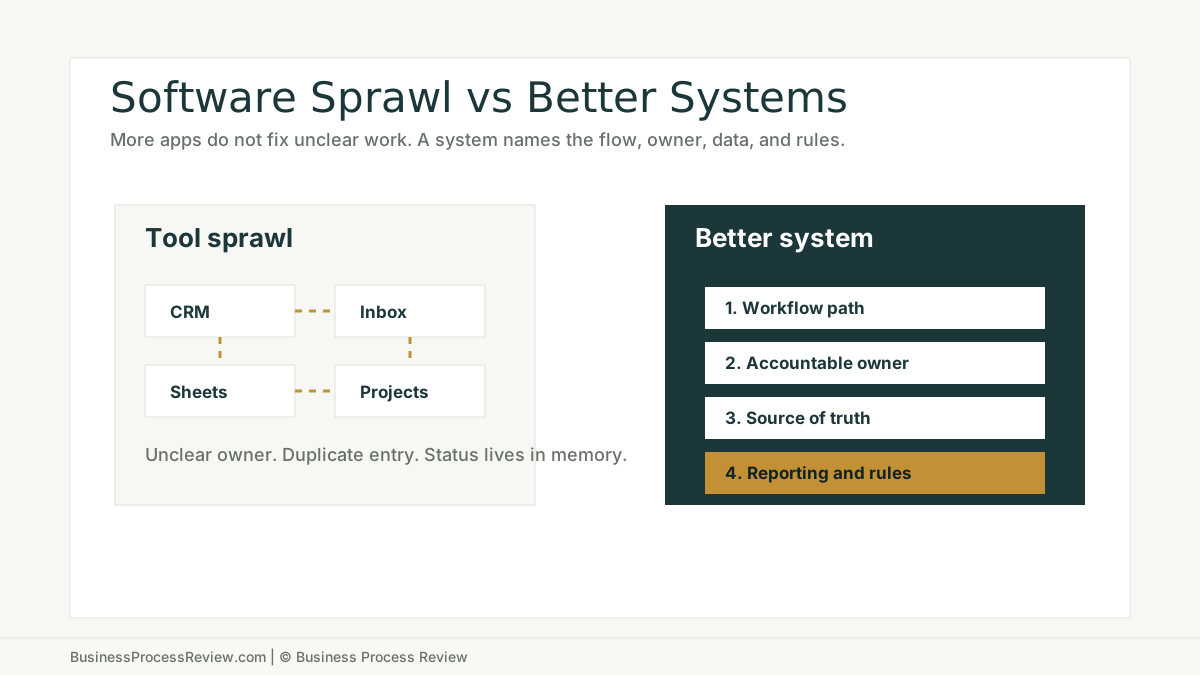
Most small businesses do not have a software shortage.
They have a systems shortage.
The company adds a CRM. Then a project tool. Then a scheduling app. Then a form builder. Then a document tool. Then an AI assistant. Then a dashboard.
The work does not get cleaner.
It just spreads.
The short answer
A small business does not need more software when the real problem is:
- nobody owns the workflow
- information lives in several places
- people rely on memory to move work forward
- status updates happen manually
- every manager has a different spreadsheet
- reports do not match
- exceptions are handled by whoever notices first
- employees have learned workarounds the owner cannot see
That is not a tool problem.
That is an operating system problem.
A business system defines how work should move, who owns it, where the truth lives, which decisions require review, and how improvement is measured.
Software should support that system. It should not be asked to invent it.
The app count is not the real issue
The modern company uses a lot of software. Okta’s Businesses at Work 2025 report said the average number of apps deployed per customer reached 101 in its customer data. BetterCloud’s State of SaaS 2025 release reported an average of 106 SaaS applications among surveyed companies.
Those are not universal small business benchmarks. They are signals.
The real issue is not the number.
The issue is whether the tools form a coherent system.
If every app has a clear job, owner, data boundary, and handoff rule, the stack can work.
If each app is a reaction to the last operational pain point, the stack becomes a pile of disconnected decisions.
Gartner’s SaaS sprawl session frames the same operating problem from another angle: companies need to turn Shadow IT and software sprawl into controlled delivery and cost discipline, not pretend every tool choice is isolated.
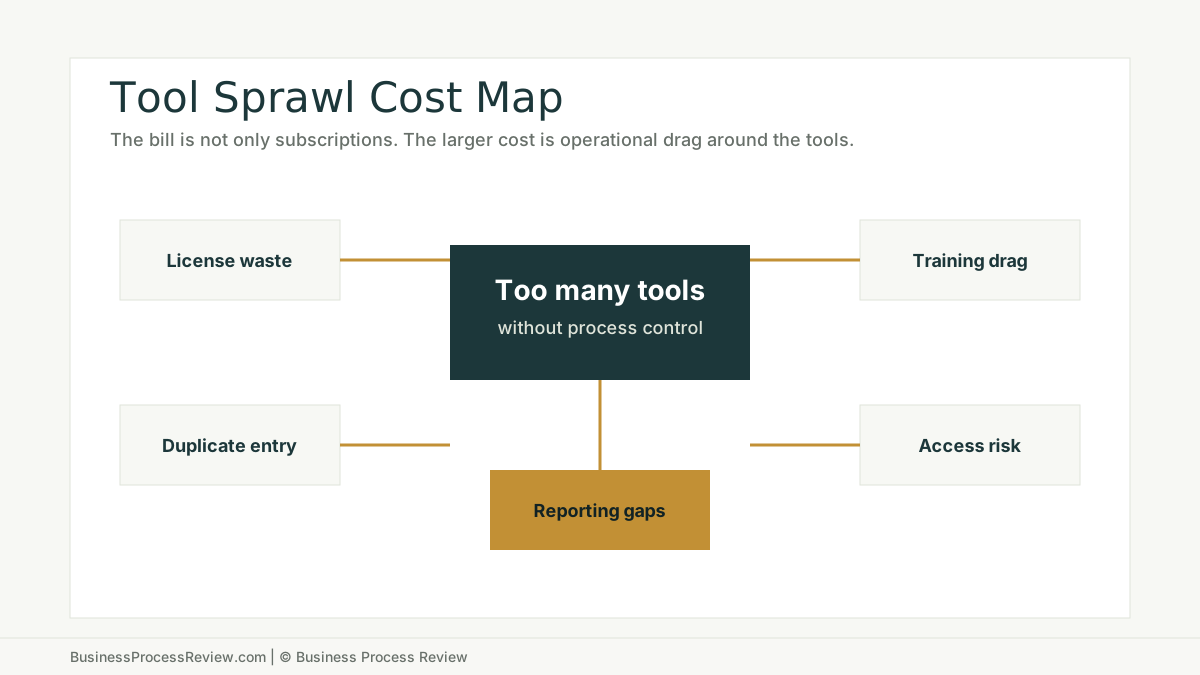
More software often hides weak ownership
The most expensive sentence in operations is: “We need a tool for that.”
Sometimes it is true.
Often it means nobody has answered basic operating questions:
- Who owns the workflow?
- What starts it?
- What information is required?
- Where does that information live?
- What happens when the information is missing?
- Who approves the decision?
- What status does the next person need?
- What report should prove the workflow is working?
If those questions are unanswered, a new app will not create clarity. It will create a new place where unclear work can happen.
That is why a business process review should come before major software decisions.
AI makes this more important, not less
AI does not remove the need for systems.
It raises the cost of not having them.
Accenture’s AI-led processes research connects AI value to modernized processes, operational maturity, data foundations, and talent readiness. That is the right frame for SMBs, even if the implementation scope is smaller.
The practical lesson is simple.
Do not add AI to a broken process and call it modernization.
First define the workflow. Then decide whether AI belongs in it.
What a small business system actually includes
A useful operating system has seven layers.
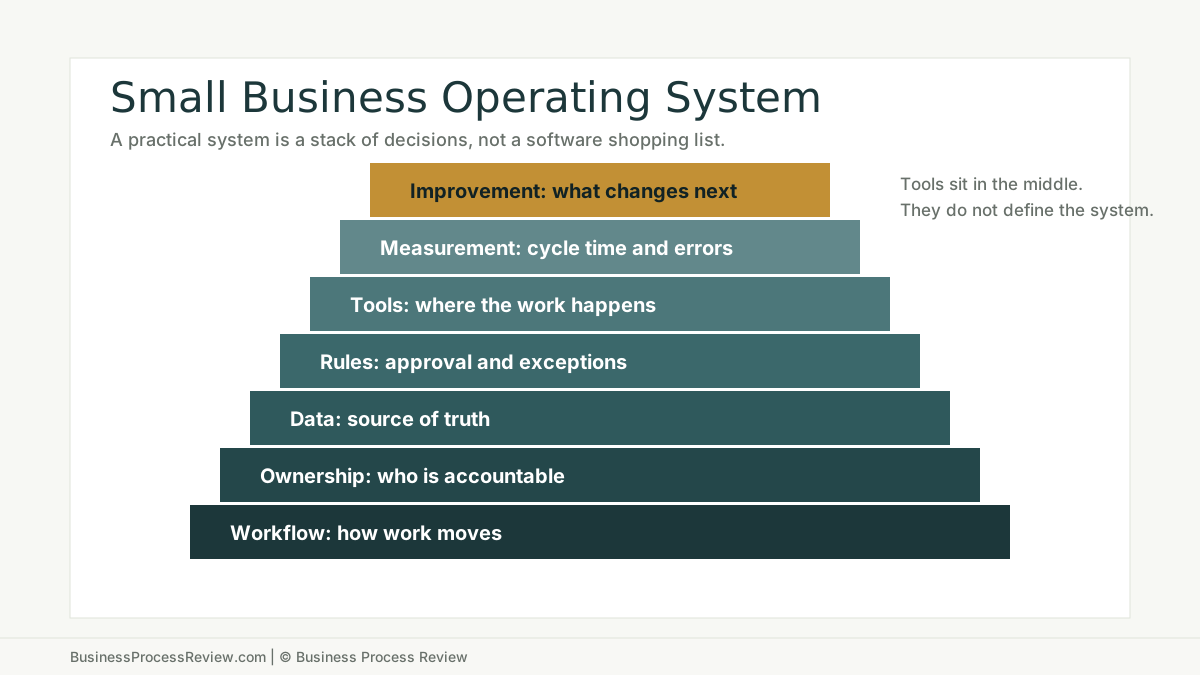
Workflow
How does the work move from request to completion?
If nobody can draw the path, the system is already weak.
Ownership
Who is accountable when the workflow stalls?
Shared ownership usually means no ownership.
Source of truth
Which system wins when the CRM, spreadsheet, inbox, and project board disagree?
If the answer depends on who you ask, the company has a reporting problem.
Rules
What requires approval? What can move automatically? What needs escalation?
Rules turn tribal knowledge into repeatable work.
Tools
Which tool supports each step?
This comes after workflow design, not before it.
Measurement
What proves the system is improving?
Cycle time, rework, handoff delays, missed follow-ups, and error rates matter more than vague adoption metrics.
Improvement
Who reviews the system after launch?
Every workflow drifts. Maintenance is part of the system.
When buying software is the right move
Buying software is reasonable when:
- the workflow is clear
- the current tool lacks a needed capability
- duplicate entry can be removed
- reporting will improve
- the owner can maintain the process
- employees can be trained without inventing workarounds
Buying is risky when:
- the process is undocumented
- managers disagree on the current workflow
- there is no source of truth
- the team wants software to enforce behavior nobody has defined
- the business case depends on vague time savings
What to do before the next software purchase
Before buying another tool, run a narrow workflow review.
Pick one workflow with visible friction:
- lead intake
- candidate submission
- invoice approval
- customer onboarding
- project handoff
- weekly reporting
- service request routing
Then answer:
- What starts the workflow?
- What is the required input?
- Who owns each step?
- Where does the source data live?
- Where does rework happen?
- Which tool creates the most friction?
- Which tool is being used as a workaround?
- What decision needs human review?
- What would a better workflow measure?
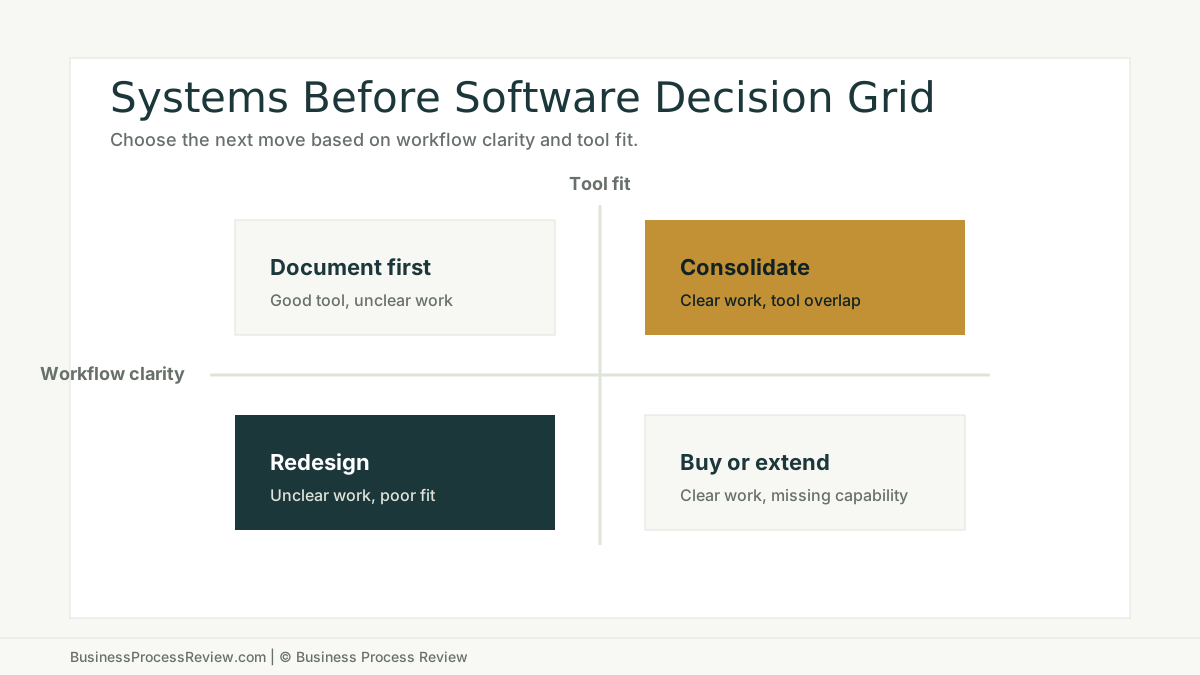
If the answers are messy, start with workflow redesign.
If the answers are clear and the current tool is the blocker, then buying or extending software may be the right answer.
The bottom line
Software is not the system.
AI is not the system.
The system is how the business reliably turns requests, information, decisions, and handoffs into completed work.
If that system is weak, more tools create more places for work to disappear.
If your team is buying software to compensate for unclear operations, start with a Business Process Review before you add another app.

About the Author
Will Gordon
Will Gordon is the founder of Business Process Review and Chief Technology Officer at Billfy. He works on workflow systems, automation, and partnerships in the ServiceNow ecosystem, with a focus on practical operational improvements for growing businesses.
Connect with Will on LinkedInFAQ
Common Questions
What are business systems for a small business?
Business systems are the repeatable workflows, owners, source-of-truth rules, tools, review points, and metrics that determine how work gets done.
How do I know if my small business has too much software?
Look for duplicate data entry, conflicting reports, unused licenses, employees keeping side spreadsheets, unclear tool ownership, and status updates that still happen by chat or email.
Should a small business buy new software to fix operations?
Only after the workflow is clear. If the process, owner, source of truth, and handoff rules are unclear, new software usually adds another place for work to get lost.
What should we do before buying another tool?
Map the workflow, identify repeated manual work, name the owner, define the source of truth, document exceptions, and decide whether the issue requires documentation, redesign, consolidation, or a new tool.
Can AI help with small business systems?
Yes, but AI should support a defined system. It can help summarize, classify, draft, route, and flag exceptions once the workflow and review rules are clear.