SMB AI Consulting
AI Consulting for SMBs: Why Small Businesses Need a Different AI Implementation Playbook
Enterprise AI is moving through large consulting ecosystems. SMBs need a leaner implementation playbook built around workflow review, practical automation, training, and support.
Enterprise AI is not failing because the models are weak.
The harder problem is implementation.
OpenAI and Anthropic are saying this plainly through their own partner strategies. The companies building frontier AI are not only selling software. They are building delivery ecosystems around strategy, workflow redesign, integration, change management, technical support, and long-term operation.
That should tell small and mid-sized businesses something important.
AI value does not come from access to a model.
It comes from getting the model into the right workflow, with the right data, the right review gates, and the right people using it.
The short answer
AI consulting for SMBs should not copy the enterprise playbook.
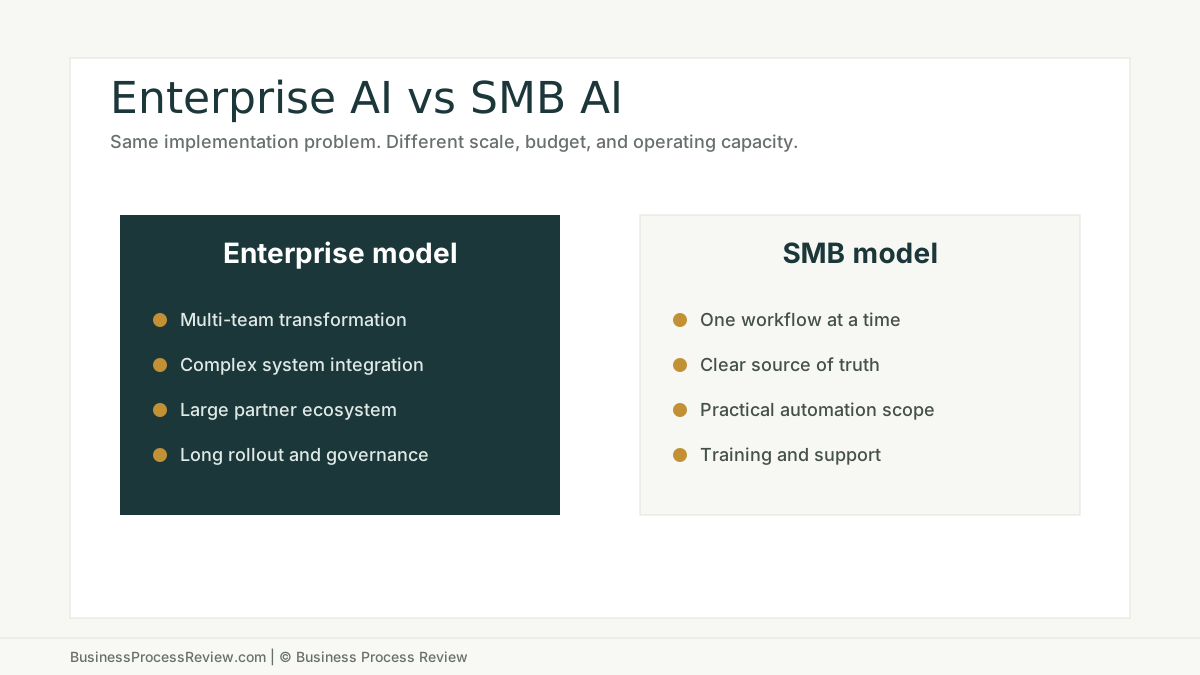
Enterprise AI programs often need:
- executive alignment
- operating model redesign
- global systems integration
- data architecture work
- change management
- governance committees
- large delivery teams
- long support contracts
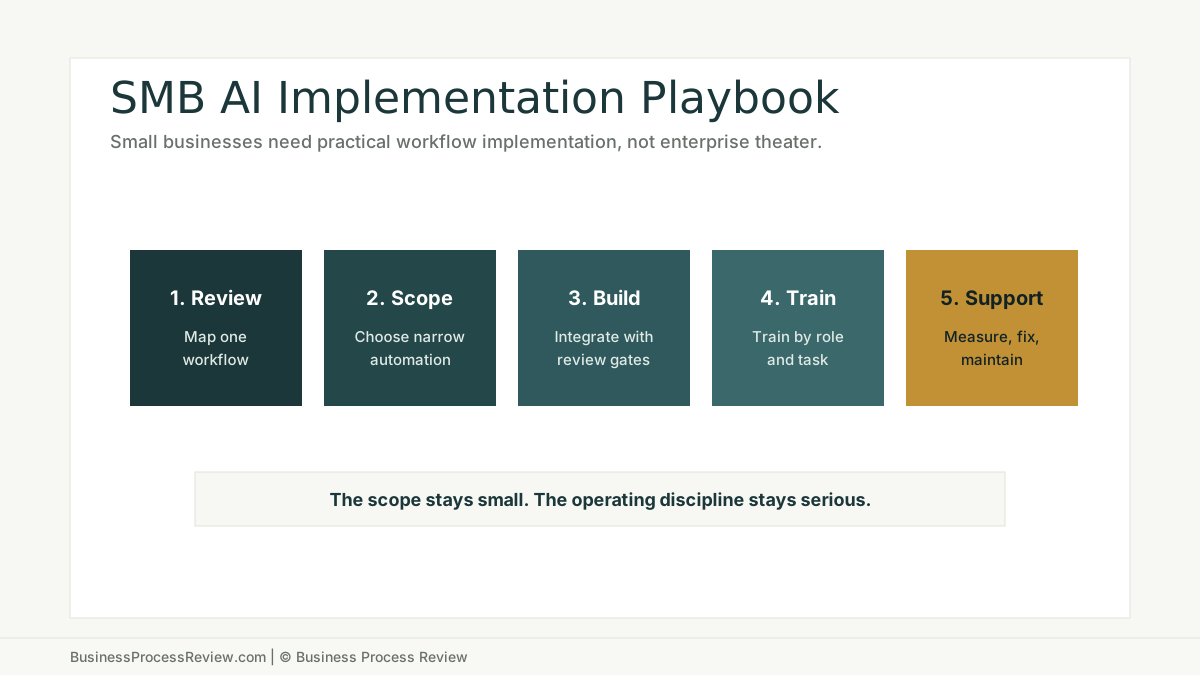
SMBs need a smaller version of the same discipline:
- identify one painful workflow
- map how the work moves now
- remove obvious process waste
- define the source of truth
- choose a narrow automation target
- train the people in the workflow
- set guardrails
- measure and maintain the result
That is the lane for Business Process Review.
Start with the workflow. Then decide what AI deserves to exist.
Frontier AI companies are proving implementation is the bottleneck
OpenAI’s Frontier Alliances announcement says the limiting factor for enterprise AI value is not model intelligence. It points to how agents are built and run inside organizations. The announcement also names the work required: leadership alignment, workflow redesign, integration across systems and data, and change management.
That is not a tool message.
That is an operations message.
OpenAI’s partners include BCG, McKinsey, Accenture, and Capgemini. These firms are not there because the model cannot answer questions. They are there because enterprise AI has to be wired into operating reality.
Anthropic is moving in the same direction. Its Claude Partner Network announcement describes a partner ecosystem for enterprises adopting Claude, including training, technical support, market development, and support for production deployments. Anthropic also announced a new enterprise AI services company with Blackstone, Hellman and Friedman, and Goldman Sachs, aimed at bringing Claude into important operations for mid-sized companies.
The signal is clear.
The hard part is not opening a chat window. The hard part is making AI part of how work actually gets done.
The enterprise playbook is too heavy for most SMBs
Enterprise AI programs are built for companies with complex systems, large budgets, internal technical teams, legal teams, data teams, and executive transformation offices.
That does not match most SMBs.
An SMB usually has:
- one or two overloaded managers
- fragmented software
- a few process owners who also do the work
- limited internal technical capacity
- informal documentation
- side spreadsheets
- manual status checks
- employees already experimenting with AI
The wrong consultant will bring a transformation program to a workflow problem.
That is expensive. It is also slow.
The cost problem is really a role problem
Private enterprise consulting rates vary by firm, contract, seniority, and scope. It is not useful to pretend there is one honest number.
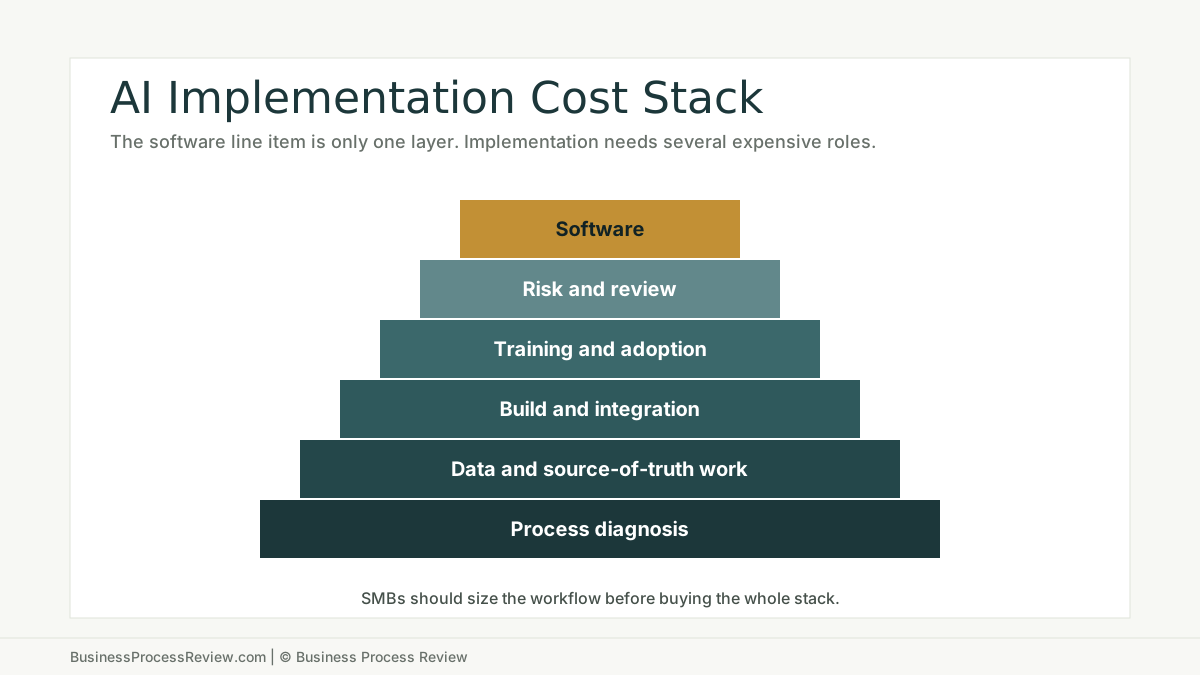
The safer point is this: serious AI implementation requires expensive skills.
The U.S. Bureau of Labor Statistics reports that the median annual wage for software developers was $133,080 in May 2024. BLS reports data scientists at $112,590 and management analysts at $101,190. A real AI implementation can involve pieces of all three roles: technical build, data analysis, and process redesign.
That is before management time, training, software, security review, maintenance, and adoption.
An SMB should not buy that whole machine before it knows which workflow is worth fixing.
What SMB AI consulting should actually do
Good SMB AI consulting should be narrow, practical, and honest about constraints.
It should answer:
- Where is the business wasting labor?
- Which workflow has enough volume to matter?
- Which steps are repeated enough for automation?
- Which data source can be trusted?
- Who owns the workflow?
- Where is human review required?
- What needs documentation or redesign before AI?
- What should not be automated?
- How will the company know if the work improved?
This is why business process review is the right starting point. The goal is not to produce a slide deck about AI strategy. The goal is to find the workflows where practical AI can reduce friction without creating new operational mess.
The SMB playbook
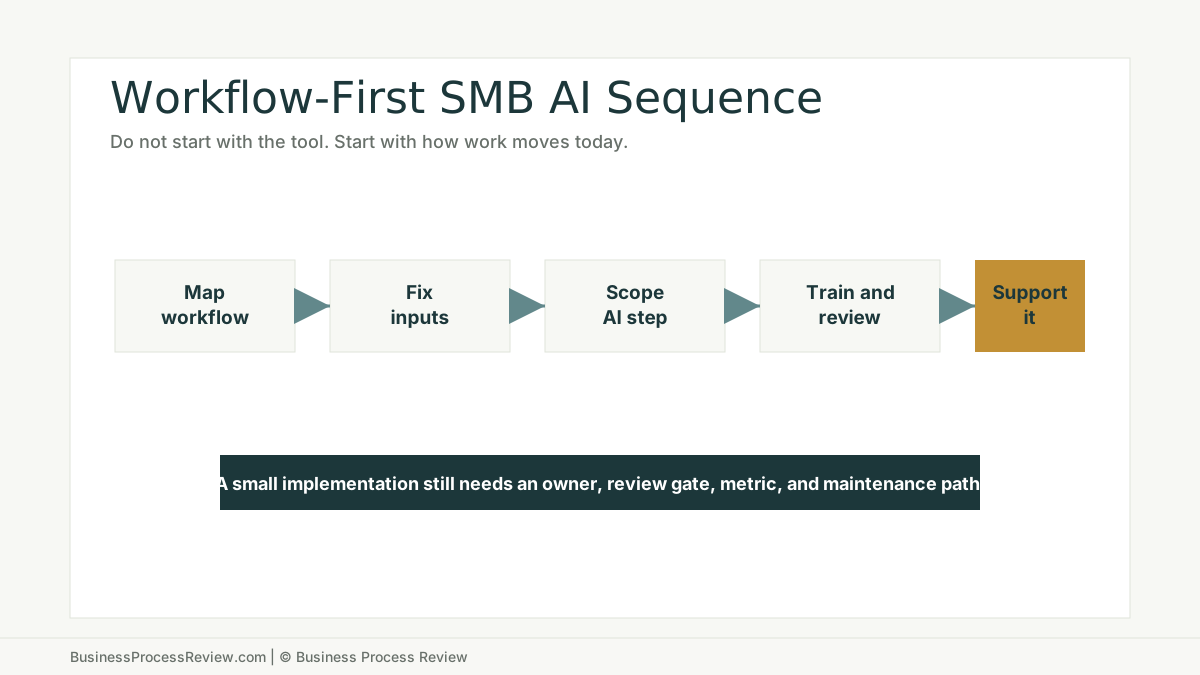
Use this sequence.
- Review the workflow.
- Name the friction.
- Clean the inputs.
- Decide the source of truth.
- Remove obvious process waste.
- Choose one automation target.
- Add human review where risk exists.
- Train the roles involved.
- Launch small.
- Measure and maintain.
What not to do
Do not start with a platform comparison.
Do not hire a developer to build around a vague idea.
Do not automate a process no one can map.
Do not ask employees to use AI without rules.
Do not measure success by tool usage alone.
Do not build something the business cannot maintain.
These mistakes are common because AI makes prototypes easy. A prototype can be useful, but it is not implementation.
Implementation means the old way of working changes.
Where Business Process Review fits
Business Process Review focuses on SMBs that need operational clarity before AI automation.
That means:
- workflow audits
- current-state process mapping
- manual work inventories
- automation opportunity scoring
- AI implementation scoping
- employee AI training
- practical guardrails
- post-launch support
The work is intentionally smaller than enterprise transformation.
That is the point.
An SMB does not need a global AI operating model before fixing invoice routing, recruiting intake, customer follow-up, document review, reporting, or internal handoffs.
It needs a clear workflow, a practical implementation, and someone accountable for keeping it useful.
When to bring in help
Bring in help when:
- you know AI could help but do not know where to start
- employees are already using AI inconsistently
- manual work is consuming manager time
- tools do not match the real workflow
- a vendor demo looks good but the implementation path is unclear
- you need automation but do not have internal AI delivery capacity
Business Process Review can start with one workflow, define the operating problem, and decide whether AI automation implementation is worth building.
The goal is not enterprise theater.
The goal is useful work that survives contact with the business.

About the Author
Will Gordon
Will Gordon is the founder of Business Process Review and Chief Technology Officer at Billfy. He works on workflow systems, automation, and partnerships in the ServiceNow ecosystem, with a focus on practical operational improvements for growing businesses.
Connect with Will on LinkedInFAQ
Common Questions
What is AI consulting for SMBs?
AI consulting for SMBs helps small and mid-sized businesses decide where AI fits, review workflows, scope practical automation, train employees, set guardrails, and maintain the implementation after launch.
How is SMB AI consulting different from enterprise AI consulting?
Enterprise AI consulting often involves large transformation programs, global delivery teams, and complex systems integration. SMB AI consulting should focus on narrow workflows, fast diagnosis, practical automation, adoption, and measurable operational improvement.
Should a small business hire an AI developer first?
Usually no. A small business should first identify the workflow problem, source data, owner, review rules, and business case. Hiring technical help before diagnosis often creates expensive prototypes that do not fit the operation.
What should an SMB do before buying AI software?
Map the workflow, identify repeated manual work, confirm the source of truth, define review gates, estimate labor cost, and decide whether the process needs documentation, redesign, training, or automation.
When is AI automation worth it for an SMB?
AI automation is worth exploring when the workflow repeats often, has stable inputs, creates measurable labor cost or delay, has a clear owner, and can be reviewed and maintained after launch.