AI Tool Evaluation
Before You Buy Another AI Tool, Audit These 7 Operational Problems
Before buying another AI tool, audit the workflow problems that decide whether the tool will help: ownership, intake, source of truth, exceptions, adoption, review, and measurement.
Buying another AI tool is easy.
Making it work inside the business is harder.
Most AI tool decisions start too late in the process. The company compares vendors before it has named the workflow problem. It asks about features before it knows which handoff is broken. It watches a demo before it knows whether the team will use the tool in the actual process.
That is how software becomes another workaround.
The short answer
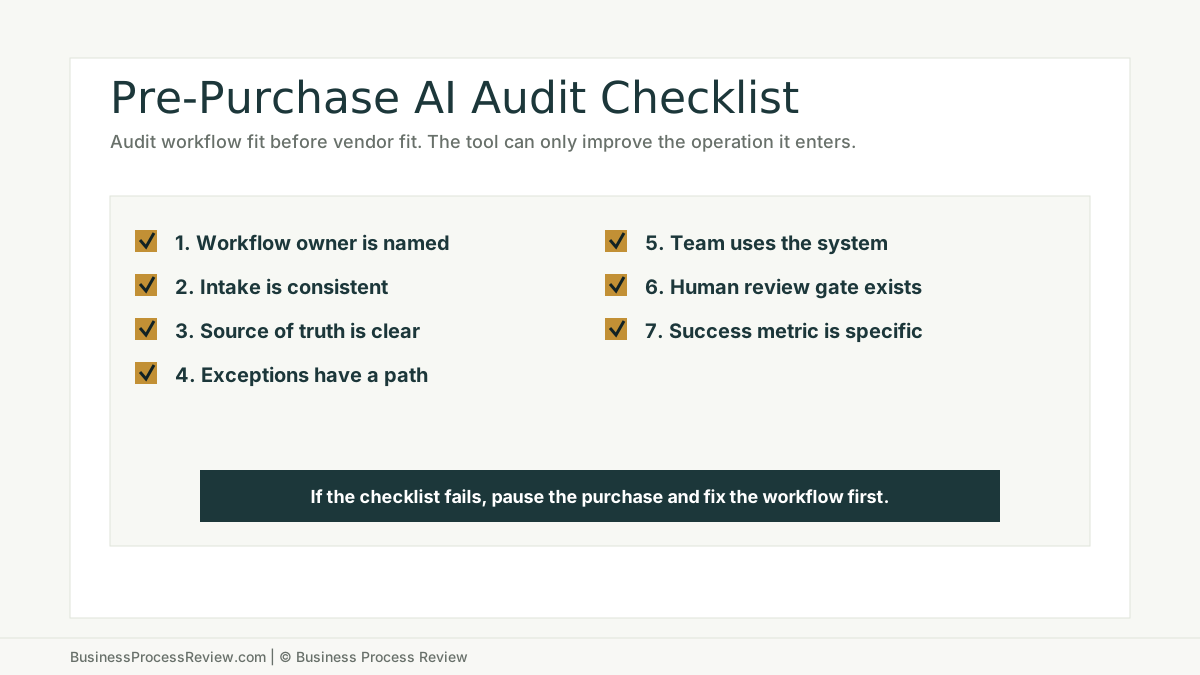
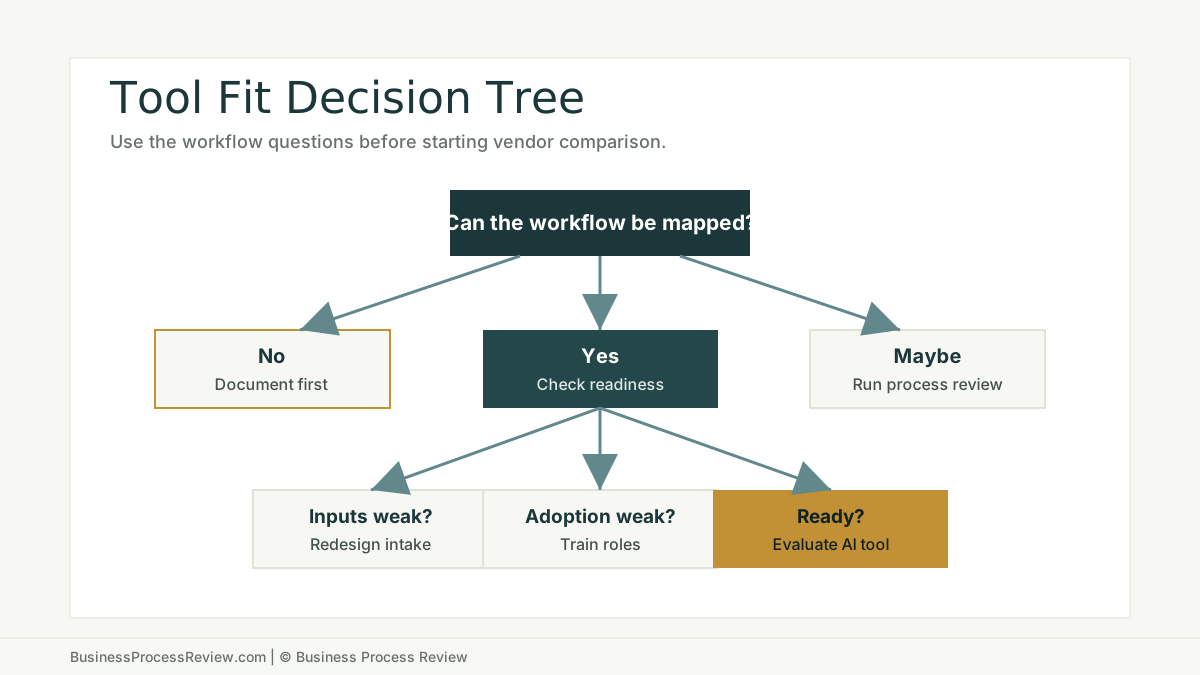
Before buying an AI tool, audit seven operational problems:
- unclear workflow ownership
- inconsistent intake
- weak source-of-truth rules
- unmanaged exceptions
- poor system adoption
- missing human review gates
- vague success metrics
If those problems exist, the tool may still be useful. But the purchase should be scoped around the workflow fix, not the vendor pitch.
Tool fit comes after workflow fit
Vendor evaluation matters. Security, privacy, integration, support, pricing, and data handling all matter.
But none of that answers the first question:
What operational problem is this tool supposed to fix?
Accenture’s research on AI-led processes found that fully modernized, AI-led processes were still a minority of surveyed companies in 2024. The practical lesson is direct: the process is the hard part. AI value depends on how work changes.
If the workflow is unclear, the tool will inherit the confusion.
Problem 1: No clear workflow owner
Every tool needs an owner in the workflow.
Not only an admin user.
An owner.
Ask:
- Who owns the business outcome?
- Who owns the workflow step this tool changes?
- Who approves exceptions?
- Who decides when the process changes?
- Who reviews whether the tool is still helping?
If the answer is “everyone,” the real answer is no one.
AI tools fail quickly in ownerless workflows because the tool will surface decisions the business has avoided. Routing, approvals, data access, exceptions, and output quality all need ownership.
Problem 2: Intake is inconsistent
Bad intake creates bad automation.
Common signs:
- requests arrive through multiple channels
- required fields are missing
- employees use free text for structured information
- attachments are named inconsistently
- customers submit partial context
- managers have to clarify before work can start
AI can help classify, extract, summarize, and route. But if the intake process is chaotic, the tool will spend its time compensating for a weak front door.
Often the best first fix is not AI. It is a better form, required fields, a routing rule, or a checklist.
Problem 3: The source of truth is unclear
Before buying a tool, decide where the truth lives.
Ask:
- Which system owns customer data?
- Which system owns job status?
- Which system owns approved documents?
- Which system owns employee records?
- Which system owns the final decision?
- What happens when two systems disagree?
PwC’s guidance on responsible AI and data governance argues that AI initiatives depend on complete, high-quality, trustworthy data. That is not abstract. It is a daily operating requirement.
If the team does not trust the source data, the tool’s output will not be trusted either.
Problem 4: Exceptions have no path
Most workflows look simple until exceptions show up.
Examples:
- a customer does not fit the standard category
- a vendor invoice is missing a purchase order
- a candidate has unusual experience
- a project change needs approval
- a document is incomplete
- a request is urgent but not labeled urgent
If exceptions are handled by memory, favors, or interruptions, the tool will not solve the problem. It may only push more edge cases into the same informal path.
Define the exception path before the purchase.
Problem 5: The team already bypasses systems
If employees already avoid the current system, ask why.
Do not assume a new AI feature will fix adoption.
People bypass systems when:
- the system is slower than the workaround
- fields do not match the real work
- reports are not trusted
- managers ask for updates outside the tool
- exceptions are easier in chat
- the process punishes the person doing the data entry
The new tool has to fit the work well enough that the old workaround can be retired.
This is where workflow redesign matters. A tool layered on top of an ignored workflow will be ignored too.
Problem 6: Human review gates are missing
AI tool evaluation should include review design.
Before buying, decide:
- what the tool can draft
- what the tool can classify
- what the tool can route
- what a human must approve
- what risk requires escalation
- what output should be logged
- who can override the system
NIST’s AI Risk Management Framework is voluntary and use-case agnostic, which makes it useful for practical planning. The SMB version is simple: define where trust is earned, where review is mandatory, and who is accountable when the system is wrong.
Problem 7: Success is vague
“Save time” is not enough.
Define the metric before the purchase:
- reduce cycle time from 4 days to 2 days
- cut duplicate entry from three systems to one
- reduce manager follow-up hours
- improve first-response time
- reduce rework from missing fields
- speed up invoice routing
- improve report preparation time
- increase employee adoption of one workflow
If the business cannot measure the current workflow, it cannot prove the tool improved it.
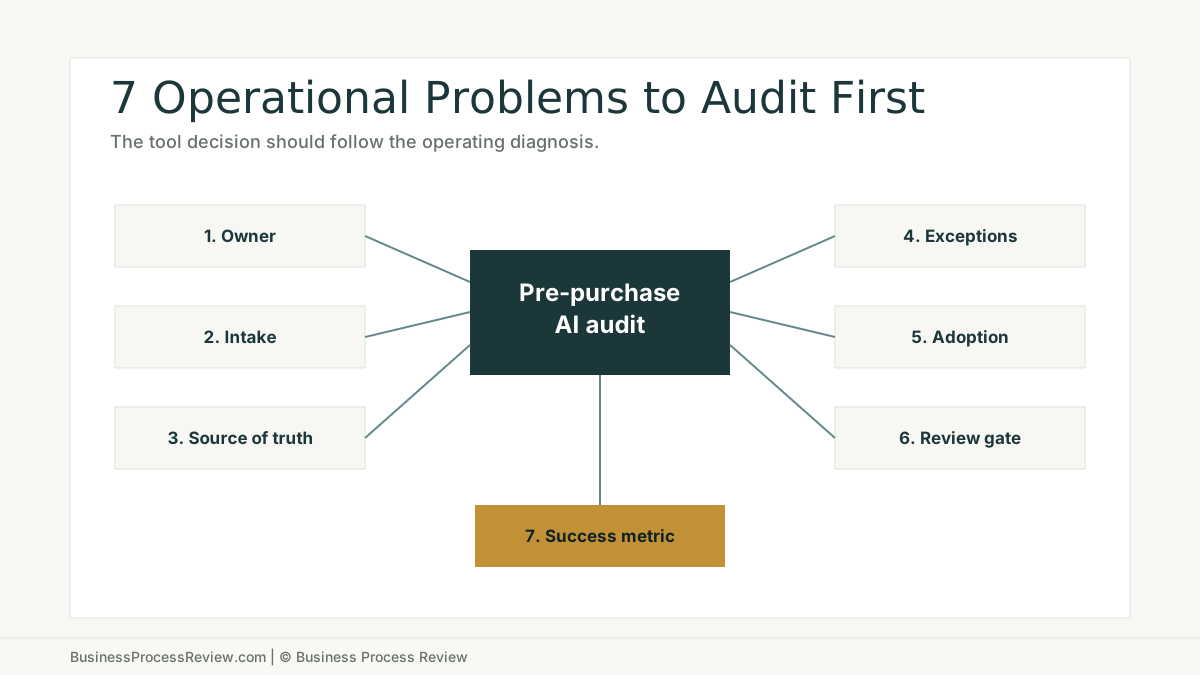
Tool problem or process problem?
Many AI purchases fail because the buyer mislabels the problem.
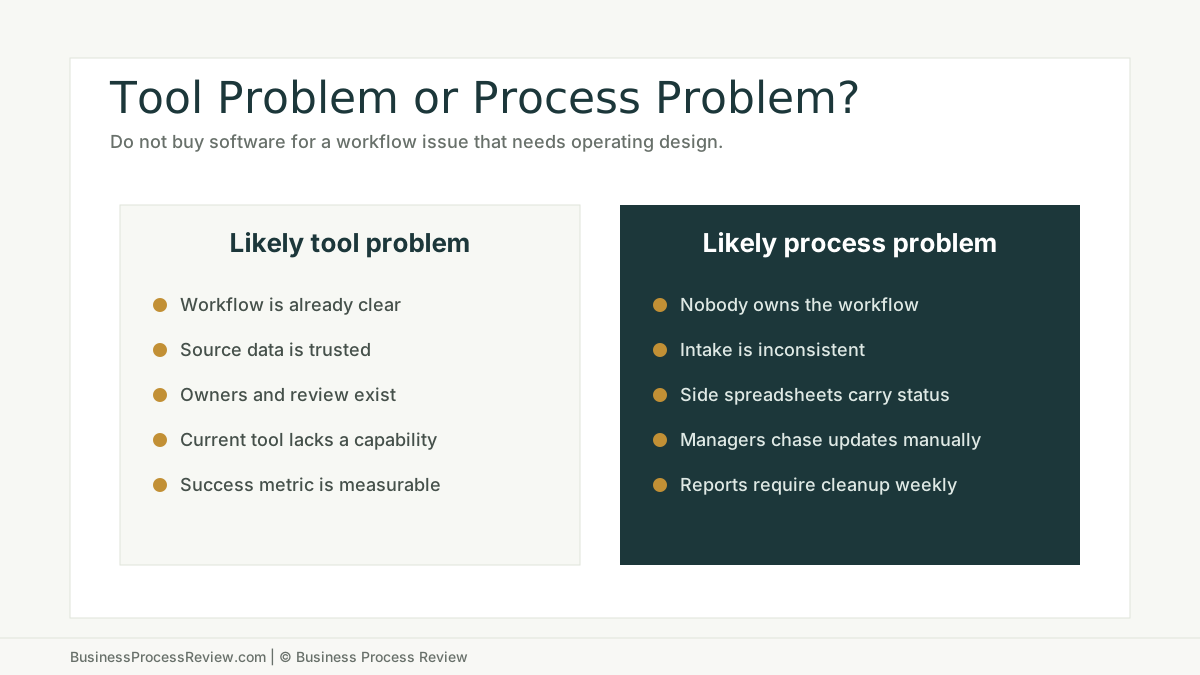
It is probably a tool problem when:
- the workflow is already clear
- the source data is trusted
- owners are named
- employees use the system
- the current tool lacks a needed capability
- the business can measure the improvement
It is probably a process problem when:
- no one owns the workflow
- intake is inconsistent
- the team uses side spreadsheets
- managers chase status manually
- employees disagree about the current process
- exceptions depend on memory
- reports require cleanup every week
Process problems need process work.
What to ask vendors after the audit
Once the workflow is understood, vendor questions become sharper.
Ask:
- Which exact step will the tool change?
- What data does it need?
- Where does that data live?
- How does it handle missing information?
- How does it route exceptions?
- What can be reviewed by a human?
- What logs are available?
- What training is included?
- How are changes maintained?
- What does support look like after launch?
KPMG’s AI Pulse research points to scaling, workforce skills, data security, privacy, and risk as execution concerns as AI moves into core operations. Those concerns should show up in vendor conversations. But they should be grounded in the workflow you actually plan to change.
Why this matters for SMBs
Small businesses do not have much room for shelfware.
The OECD’s paper on AI adoption by SMEs notes that SME adoption remains relatively low compared with other digital technologies and larger firms. That makes tool selection more consequential. A bad purchase does not only waste subscription cost. It burns staff trust and makes the next useful implementation harder.
The Stanford AI Index shows business AI usage accelerating, but adoption alone does not prove operating value. The difference is execution.
The pre-purchase audit
Before signing the contract, run a focused business process review on the workflow the tool is supposed to improve.
The review should produce:
- current-state workflow map
- problem statement
- source-of-truth decision
- owner list
- exception path
- review gate
- adoption risk
- success metric
- buy, wait, redesign, or automate recommendation
Only then does vendor evaluation become useful.
When to bring in help
Bring in help when the business feels pressure to buy but cannot explain the workflow clearly.
Business Process Review can audit the operational problems first, decide whether the workflow needs redesign, and then scope AI automation implementation around the work that is actually worth improving.
The best AI tool purchase is not the one with the strongest demo.
It is the one attached to a workflow that is ready to improve.

About the Author
Will Gordon
Will Gordon is the founder of Business Process Review and Chief Technology Officer at Billfy. He works on workflow systems, automation, and partnerships in the ServiceNow ecosystem, with a focus on practical operational improvements for growing businesses.
Connect with Will on LinkedInFAQ
Common Questions
What should a business audit before buying an AI tool?
Audit workflow ownership, intake quality, source-of-truth rules, exception handling, system adoption, human review gates, and the success metric the tool is supposed to improve.
Is an AI vendor checklist enough before buying software?
No. Vendor evaluation is useful, but it should come after the business understands the workflow problem, data requirements, operational risk, and adoption burden.
How do you know if an AI tool is solving the wrong problem?
A tool is probably solving the wrong problem if the team still needs side spreadsheets, manual status checks, duplicate entry, unclear approvals, or manager follow-up after implementation.
Should a small business buy AI software before a process review?
Not if the tool will touch a real workflow. A focused process review can prevent the business from buying software for a problem caused by unclear ownership, poor intake, or weak data.
What is the best first AI tool for a small business?
The best first tool is the one attached to a clear, repeated, measurable workflow. In many cases, the first step is not a tool at all. It is documentation, workflow redesign, or training.