AI Automation
What an AI Readiness Audit Actually Looks Like
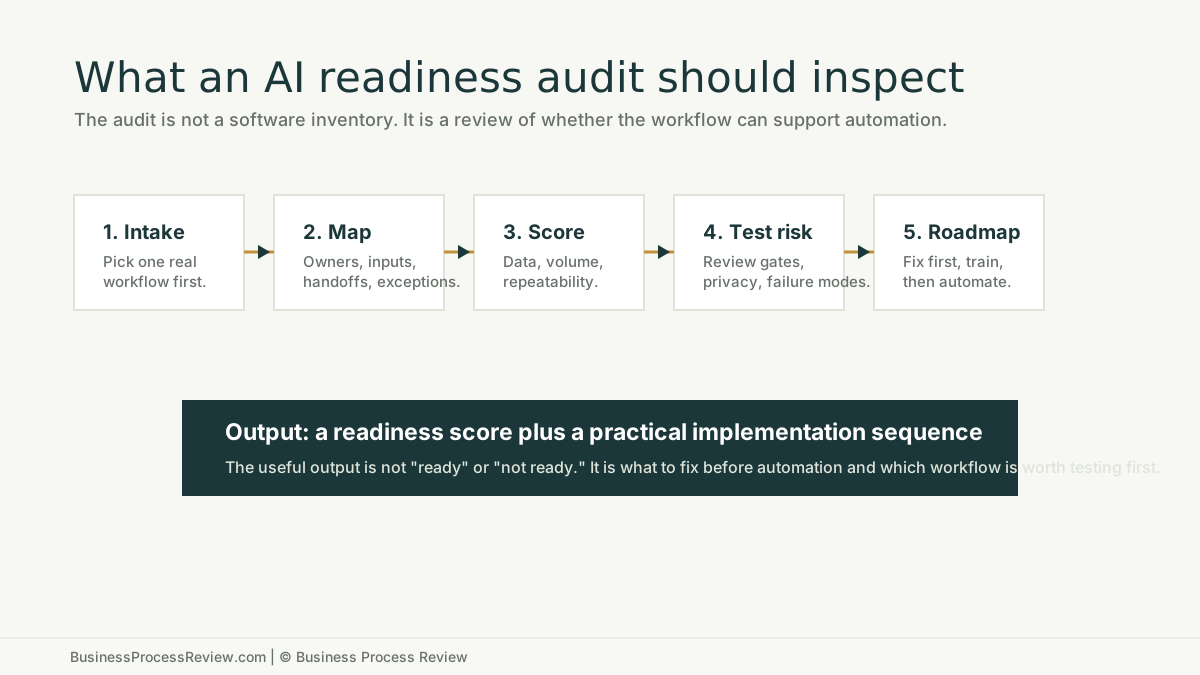
An AI readiness audit should test workflow clarity, data quality, ownership, review gates, adoption capacity, and maintenance before a business tries to automate work.
Most AI readiness audits ask the right broad question but miss the practical one.
The broad question is: “Is this company ready for AI?”
The practical question is: “Is this workflow clear enough, owned enough, and measured enough that AI automation will improve it instead of making it harder to manage?”
That difference matters. A company can have modern software, employee interest, and leadership support and still be unready for useful AI automation. If the work lives in inboxes, side spreadsheets, personal memory, and informal approvals, AI has very little stable ground to stand on.
That is why a serious business process review should come before most AI automation projects.
The short answer
An AI readiness audit reviews whether a business can support practical AI automation.
It should inspect:
- how the workflow actually moves
- where the source data lives
- who owns each step
- which decisions repeat
- where human review is required
- what employees need to change
- how the company will measure and maintain the result
It should not be a generic software checklist.
Microsoft’s public AI Readiness Assessment uses seven broad pillars, including business strategy, governance and security, data foundations, organization and culture, infrastructure, and model management. That is useful framing. For a small or mid-market company, the audit still has to get more concrete. It has to touch the actual workflow.
Why AI readiness is mostly operational
AI readiness is not just a technology problem.
It is an operating problem.
McKinsey’s 2025 State of AI research says organizations are beginning to redesign workflows, elevate governance, and mitigate risks as they try to capture value from AI. It also reports that 78 percent of respondents say their organizations use AI in at least one business function, while only 21 percent of respondents using gen AI say their organizations have fundamentally redesigned at least some workflows. That gap is the problem.
AI use is spreading faster than workflow discipline.
The companies that feel “stuck” usually do not have a prompt problem. They have process problems:
- the intake step is inconsistent
- customer or job data is incomplete
- two systems disagree
- approvals happen in chat
- status is tracked in a spreadsheet outside the main tool
- managers chase updates manually
- nobody owns exceptions
- employees use AI differently from one another
Adding AI to that environment can produce drafts, summaries, and routing suggestions. It can also create more review work, more rework, and more confusion about what is authoritative.
What a real AI readiness audit should review
A useful audit starts with one workflow. Not the whole company. Not every AI idea on a whiteboard.
Pick a workflow with real volume and real pain: candidate intake, quote creation, invoice routing, customer onboarding, project handoff, document review, reporting, or internal support requests.
Then inspect the operating layers.
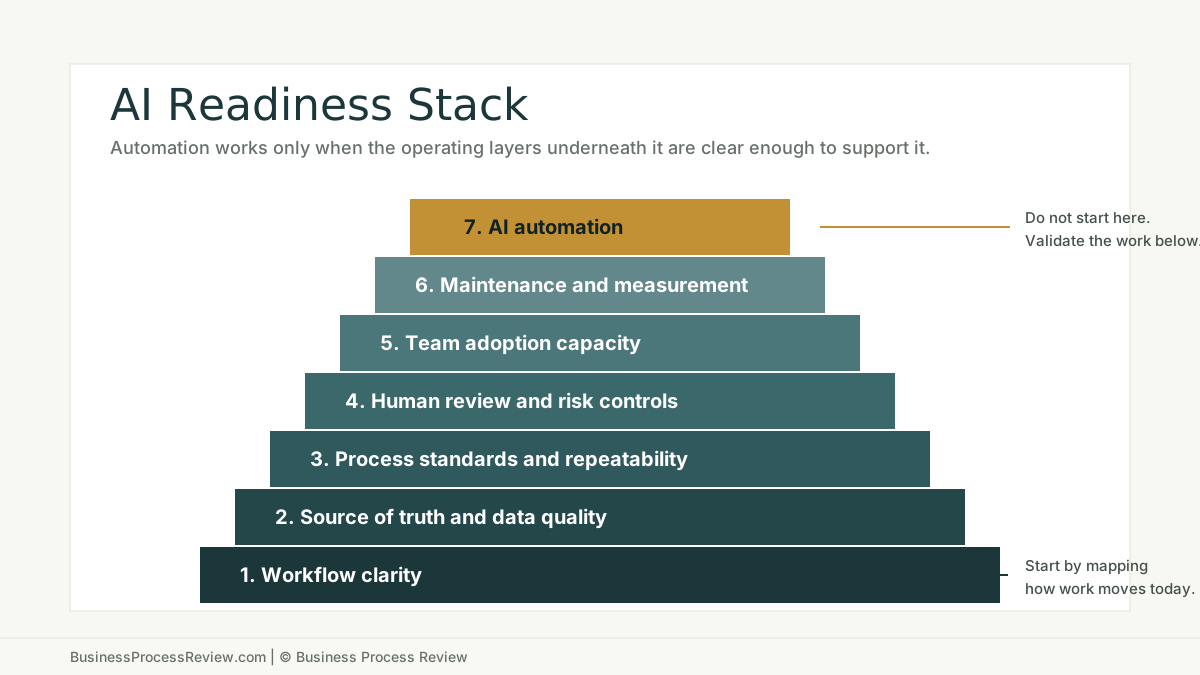
1. Workflow clarity
The audit should answer simple questions:
- What starts the process?
- What information is required at intake?
- Who owns the next step?
- What happens when information is missing?
- Which steps are official?
- Which steps are informal workarounds?
- Where does the process end?
If the team cannot answer those questions clearly, the company is not ready for automation. It is ready for mapping.
2. Data and source-of-truth quality
AI automation depends on reliable inputs.
IBM’s guide to AI-ready data points to data sprawl, poor data quality, operational bottlenecks, and security or governance risks as common barriers. In practical workflow terms, that means the audit has to identify where the facts live.
Ask:
- Which system is the source of truth?
- Are fields complete and consistent?
- Does the team trust the data?
- Is sensitive data involved?
- Who can access it?
- Which fields does the workflow actually need?
If the source of truth is unclear, AI will pull from the same mess employees already fight.
3. Process standardization
Not every process needs to be rigid. But automation needs enough repeatability to be useful.
The audit should separate:
- repeated rules
- judgment calls
- exceptions
- one-off decisions
- policy-driven approvals
- customer-specific variations
This is where many AI projects fail. Leadership sees a repeated outcome and assumes the process is repeatable. Operators know the truth: every request looks similar until the exceptions arrive.
4. Human review and risk controls
NIST’s AI Risk Management Framework is voluntary guidance for improving how organizations incorporate trustworthiness into AI products, services, and systems. That sounds high level, but the practical implication is simple: decide where human review belongs before launch.
A readiness audit should define:
- what AI can draft
- what AI can classify
- what AI can route
- what humans must approve
- what confidence threshold triggers review
- what data should never be entered
- what exception path should exist
If no one can explain how bad AI output will be caught, the workflow is not ready.
5. Team adoption capacity
AI readiness includes people.
The audit should look at manager expectations, employee training, role-specific use cases, and whether the team is willing to retire old workarounds. McKinsey’s research notes that adoption and scaling practices include embedding AI into business processes, role-based training, feedback mechanisms, roadmaps, and KPI tracking. Those are not extras. They are part of implementation.
A workflow can be technically ready and still fail because the team does not trust it, does not understand it, or keeps using the old path.
6. Maintenance and measurement
AI automation is not finished when it launches.
The audit should define:
- the owner
- the success metric
- the error review process
- the support cadence
- when the workflow should be revisited
- who approves changes
ISO explains ISO/IEC 42001 as a management system standard for organizations that develop, provide, or use AI systems. Even if an SMB is not pursuing formal certification, the point still applies: AI needs responsibilities, processes, controls, and continual improvement.
The readiness score should not be the goal
Scores are useful only if they change what the company does next.
A bad audit gives a number.
A good audit gives a sequence:
- Map this workflow.
- Clean this data source.
- Remove this unnecessary approval.
- Define this review gate.
- Train these roles.
- Test automation on this narrow step.
- Measure these outcomes.
Weak readiness looks obvious once you map it
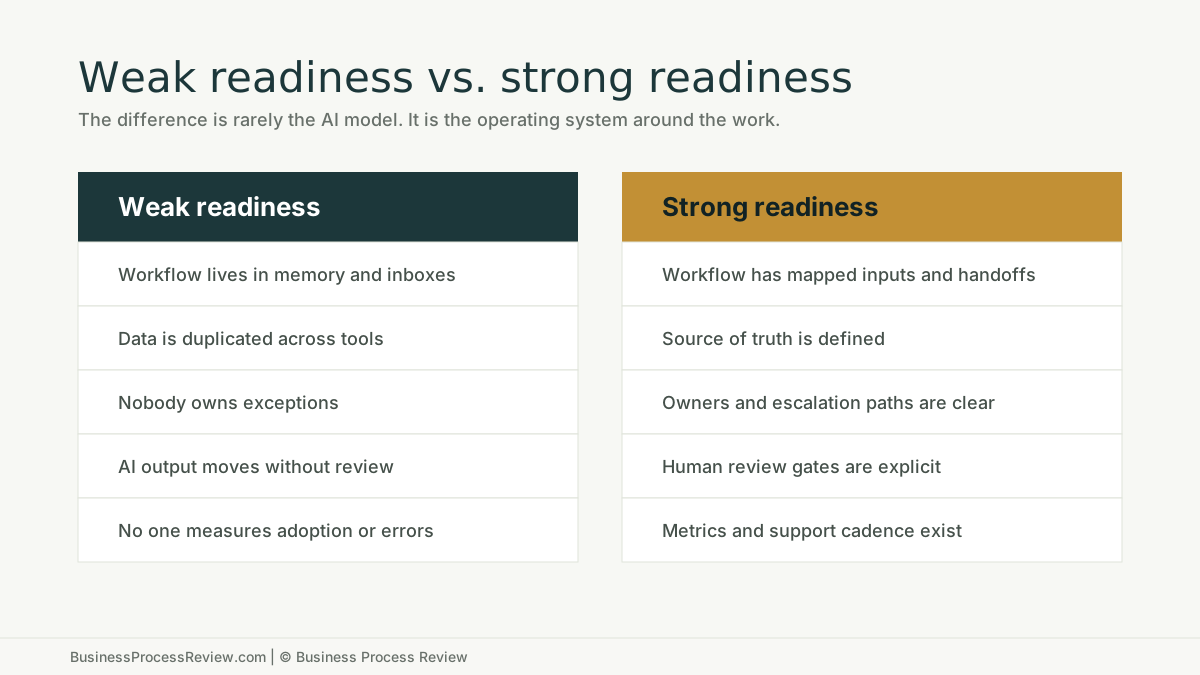
Most companies can feel when they are not ready, but they have not named the pattern.
Weak readiness looks like this:
- the process depends on one experienced employee
- the CRM is not trusted
- people paste data between tools
- approvals happen outside the system
- managers ask for status updates manually
- AI output is accepted without a review rule
- nobody tracks whether the workflow improved
Strong readiness looks different:
- the workflow is mapped
- the source of truth is defined
- owners are named
- common exceptions are documented
- review gates are explicit
- employees know when AI is allowed
- the business measures time, quality, and rework
What the audit should produce
The output should be practical enough for an operator to use.
Useful deliverables include:
- current-state workflow map
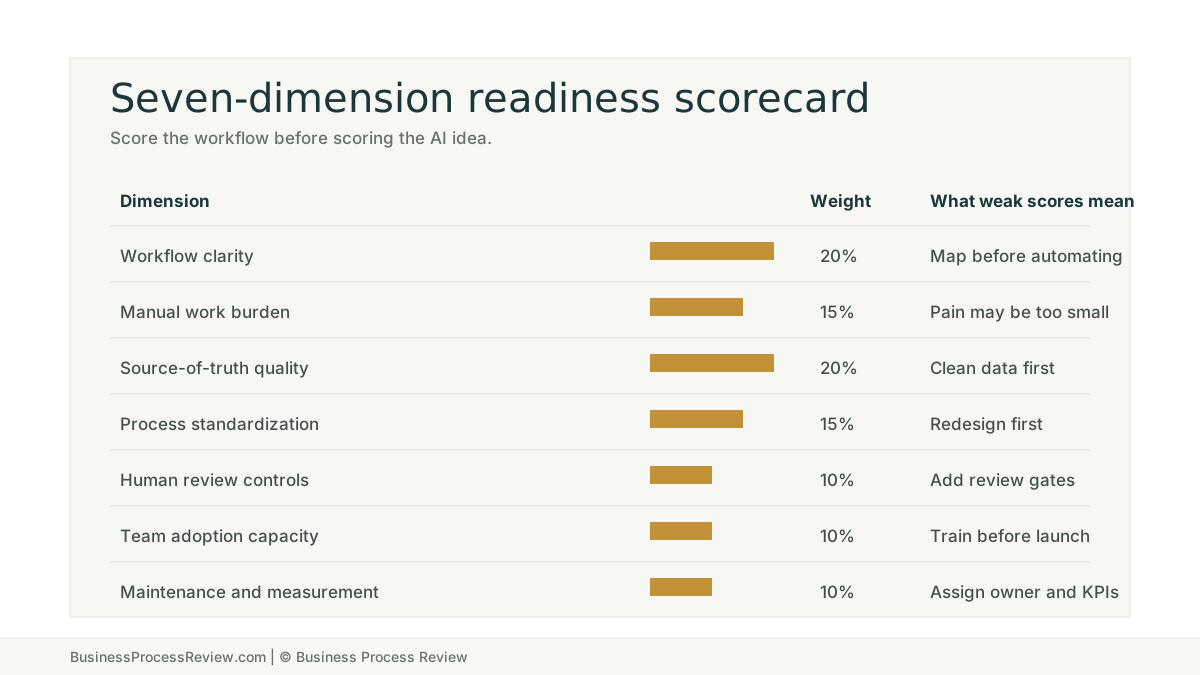
- readiness score by dimension
- manual work inventory
- source-of-truth notes
- risk and review notes
- automation candidate list
- implementation sequence
- training and adoption notes
- measurement plan
The output should also say when not to automate.
That is important. Some workflows need documentation. Some need redesign. Some need employee training. Some need a better source of truth. AI automation belongs only after the workflow is clear enough to support it.
Where an automation savings calculator fits later
An AI readiness audit answers: “Can this workflow support AI automation?”
An automation savings calculator answers: “What is the rough labor cost of this repeated work?”
Those are different jobs.
The future calculator should estimate manual work cost from task volume, minutes per task, loaded labor cost, rework, and waiting time. The readiness audit should decide whether the workflow is safe and structured enough to improve.
Do not confuse those two decisions.
When to get outside help
Get outside help when the team agrees there is waste but cannot agree where it lives.
That is the common pattern. The founder sees delay. Managers see rework. Employees see bad handoffs. Everybody is partly right.
Business Process Review starts by reviewing how the work actually moves. From there, we can help decide whether the next step is workflow redesign, AI automation implementation, employee training, or ongoing support.
If your team is talking about AI but still cannot explain the workflow clearly, start with a Business Process Review before buying another tool.

About the Author
Will Gordon
Will Gordon is the founder of Business Process Review and Chief Technology Officer at Billfy. He works on workflow systems, automation, and partnerships in the ServiceNow ecosystem, with a focus on practical operational improvements for growing businesses.
Connect with Will on LinkedInFAQ
Common Questions
What is an AI readiness audit?
An AI readiness audit reviews whether a business has the workflows, data, ownership, controls, and adoption capacity needed to use AI automation safely and usefully.
Is an AI readiness audit the same as an AI tool assessment?
No. A tool assessment compares software. A useful readiness audit reviews the operating conditions that decide whether any tool will work inside the business.
Who should run an AI readiness audit?
The audit should involve operations leaders, process owners, managers, and technical support. AI readiness is not only an IT decision.
What is the biggest sign a company is not ready for AI automation?
The biggest sign is an unclear workflow. If people cannot agree on the current process, owners, exceptions, and source of truth, automation will likely make the confusion faster.
Should small businesses do an AI readiness audit before buying AI software?
Yes, if the software will touch real workflows. A short process-first review can prevent the company from automating a broken handoff, weak data source, or poorly owned process.